Links below are affiliate links. We earn a commission on purchases at no extra cost to you.
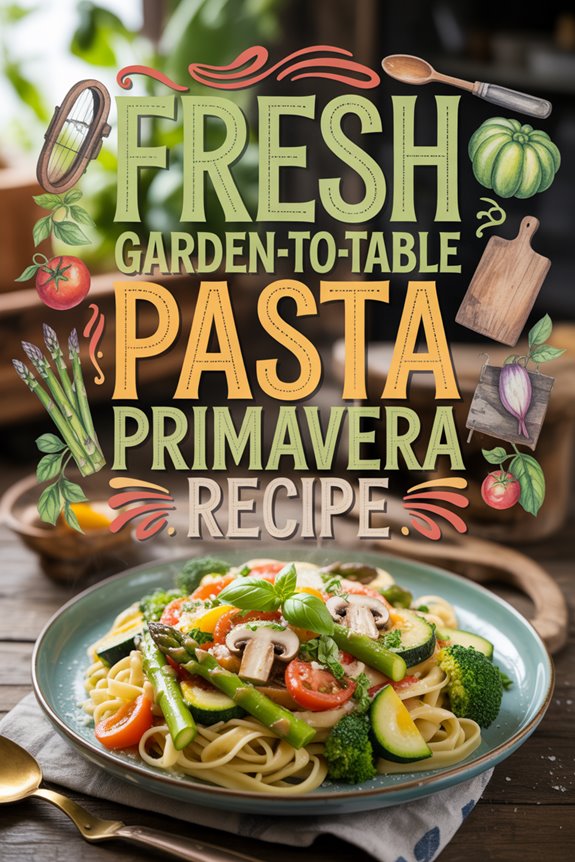
Fresh Garden-to-Table Pasta Primavera Recipe
Kaleidoscope of fresh veggies and delicate herbs elevate this garden-to-table pasta primavera, promising a vibrant, healthy meal you’ll crave again and again.
Why You’ll Love this Garden-to-Table Pasta Primavera
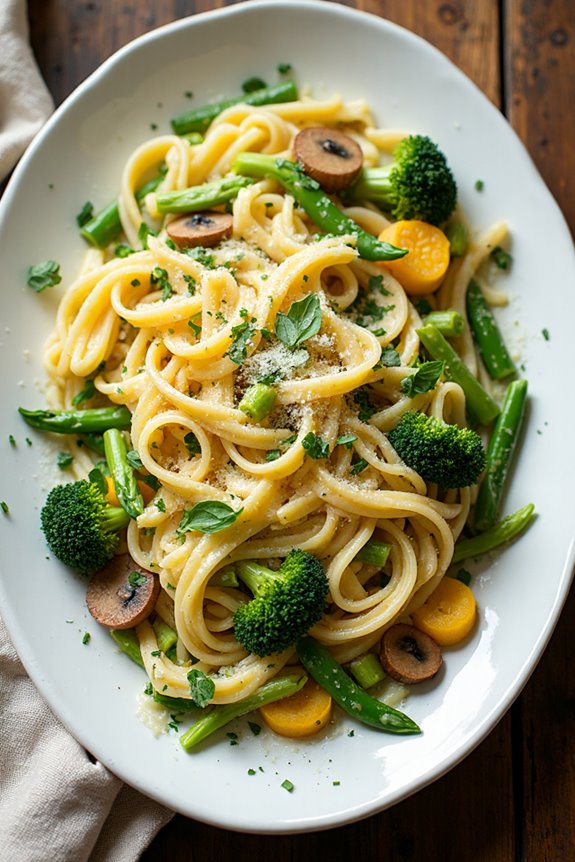
When you dig into this Pasta Primavera, you’re not just eating a meal—you’re savoring a whole garden’s worth of fresh, vibrant veggies that practically jump off the plate.
It’s like a veggie party where everyone gets invited—crisp asparagus, tender broccoli, sweet snow peas, and more, all mingling in perfect harmony. The colors alone make it impossible to resist.
Plus, the way the sauce lightly coats the noodles without drowning those delicate flavors? Genius.
It’s fresh but comforting, simple yet fancy enough to impress. And let’s be honest, who doesn’t want a dish that feels healthy but tastes downright indulgent?
This pasta doesn’t just fill you up; it lifts your mood, brightens your day, and makes veggies cool again. Worth every forkful, no question.
What Ingredients are in Garden-to-Table Pasta Primavera?
Alright, ready to gather some fresh, colorful ingredients and bring this Pasta Primavera to life? This recipe is a beautiful mix of crisp veggies, tender pasta, and a creamy, cheesy sauce that’s surprisingly light. Think of it as a garden in a bowl, with every bite bursting with freshness and a little bit of that cozy, creamy goodness.
You may be interested
You’ll want to have everything prepped and ready so you can breeze through the cooking without scrambling for that one elusive spice or vegetable.
Here’s what you’ll need:
- 4 ounces asparagus, cut into 1-inch pieces
- 1/2 cup broccoli florets
- 1/2 cup fresh snow pea pods, cut into 1-inch pieces
- 1/2 cup yellow squash, sliced
- 1/2 cup zucchini, sliced
- Cooking spray (for sautéing)
- 8 ounces mushrooms, sliced
- 1 garlic clove, chopped
- 1 tablespoon water (for simmering veggies)
- 8 ounces uncooked linguine
- 2 tablespoons dry white wine
- 1/4 teaspoon chicken bouillon
- 3/4 cup skim milk
- 1 tablespoon flour
- 1/4 cup parmesan cheese (for the sauce)
- 1 tablespoon parmesan cheese (for sprinkling on top)
- 1 tablespoon chopped fresh parsley
- 1 1/2 teaspoons chopped fresh basil
- 1/8 teaspoon salt
- 1/2 teaspoon pepper
Now, about these ingredients—don’t let the list intimidate you. The fresh veggies are the star here, so try to pick the freshest you can find, especially the asparagus and snow peas. They add that crisp snap and sweet bite that make this dish sing.
The white wine and chicken bouillon might seem fancy, but they just add a subtle depth to the sauce, nothing too overpowering. And hey, if you’re not a fan of mushrooms or can’t find fresh basil, no biggie—swap or skip them, and the pasta will still be delicious.
Just remember, the parmesan cheese is key for that cheesy, tangy finish, so don’t be shy with it. This recipe is flexible, forgiving, and all about celebrating those garden-fresh flavors without fuss.
How to Make this Garden-to-Table Pasta Primavera
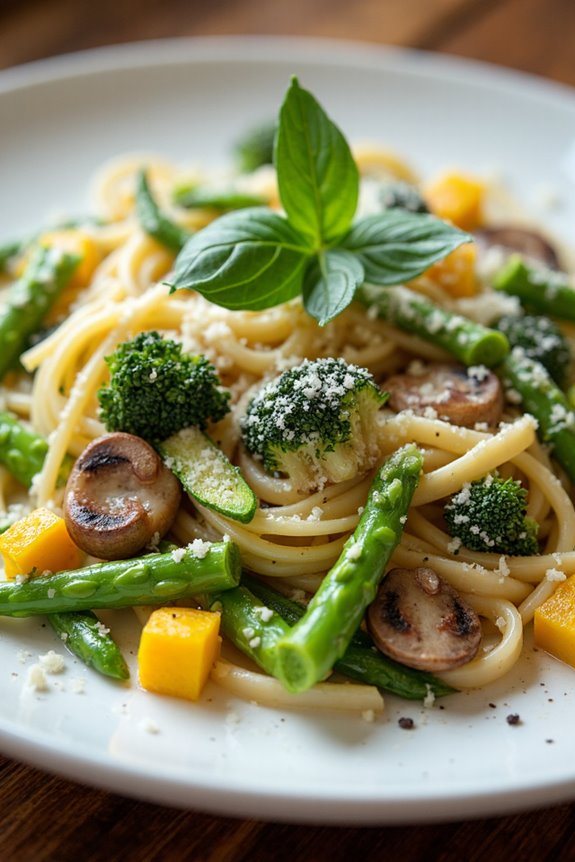
Alright, let’s explore making this colorful Pasta Primavera that’s bursting with fresh garden veggies. Start by grabbing 4 ounces of asparagus (cut into 1-inch pieces), 1/2 cup each of broccoli, fresh snow pea pods (also sliced into 1-inch bits), yellow squash, and zucchini — both sliced.
Arrange all these vibrant veggies in a steamer over boiling water, and let them steam away for about 15 to 20 minutes until they’re crisp-tender. That means they’re cooked just right — tender, but still with a little snap, like a veggie high-five. Once done, set them aside, because they’re going to join the party later.
Next up, coat a large nonstick skillet with cooking spray and heat it over medium-high heat until it’s nice and hot. Toss in 8 ounces of sliced mushrooms and 1 chopped garlic clove, sautéing for about 5 minutes until the mushrooms are tender and fragrant — you’ll know because your kitchen starts smelling pretty amazing at this point.
Then, add the steamed veggies back in along with 1 tablespoon of water and let everything simmer uncovered for about 5 minutes. This step lets all those flavors mingle and get cozy. After that, set the veggie mixture aside and focus on the pasta.
Cooking the pasta is straightforward: boil 8 ounces of linguine according to the package, then drain and set it aside.
Now for the sauce — here’s where it gets interesting. In a small saucepan, combine 1/4 cup hot water, 2 tablespoons of dry white wine, and a 1/4 teaspoon of chicken bouillon. Bring this to a boil and keep it cooking until it reduces down to about 2 tablespoons — this concentrated mixture is like a flavor bomb waiting to happen.
Meanwhile, whisk 3/4 cup of skim milk with 1 tablespoon of flour in a small bowl until smooth. Slowly stir this into the wine mixture and cook for about 5 minutes until thickened and bubbly, like a creamy hug for your noodles.
Pour the sauce over the linguine, toss in 1/4 cup parmesan cheese, 1 tablespoon chopped fresh parsley, 1 1/2 teaspoons chopped fresh basil, a pinch of salt (1/8 teaspoon), and a half teaspoon of pepper. Give everything a good toss so those herbs and cheese get evenly distributed.
Serve it all up on a large platter, pile on the reserved veggie mixture, and sprinkle with the last tablespoon of parmesan. There you have it — a dish that’s fresh, flavorful, and just waiting to be devoured. Using a high end food processor can help you prepare your vegetables quickly and efficiently, enhancing your cooking experience.
Garden-to-Table Pasta Primavera Substitutions and Variations
Even though the classic garden-to-table Pasta Primavera is already a star, swapping out or adding different veggies can turn it into a whole new adventure on your plate.
Think about tossing in bell peppers for a splash of sweetness or cherry tomatoes for that juicy pop. Mushrooms? Absolutely—they add a meaty texture without the meat.
If you’re feeling a bit wild, try kale or spinach instead of broccoli; they wilt beautifully and boost the green factor. And don’t shy away from zucchini or yellow squash slices—they soak up the sauce like little flavor sponges.
Want a bit of crunch? Toasted pine nuts or slivered almonds work wonders.
The beauty lies in the flexibility—mix and match until your taste buds throw a party. Just don’t overdo it; this dish thrives on balance.
What to Serve with Garden-to-Table Pasta Primavera
When you’ve got a vibrant plate of garden-to-table Pasta Primavera, picking the right sides can turn a good meal into a memorable one.
Think light and fresh to complement those crisp veggies and delicate sauce. A simple mixed green salad tossed with lemon vinaigrette adds just enough zing without stealing the show.
Crusty garlic bread? Absolutely—because who can resist mopping up every last bit of sauce? For drinks, a chilled glass of dry white wine or sparkling water with a slice of lemon keeps things invigorating.
If you want to go a bit heartier, roasted cherry tomatoes or a bowl of marinated olives can add that extra pop of flavor.
Trust me, the right sides make your Primavera shine even brighter.
Final Thoughts
Although Pasta Primavera might sound fancy, it’s really a straightforward dish that brings out the best in fresh veggies and simple ingredients. It’s like a garden party on your plate—colorful, crisp, and full of flavor without any fuss.
The trick isn’t to overcook the veggies; keep them just tender enough to still have a little snap. The creamy parmesan sauce ties everything together without feeling heavy, which is a win in my book. Plus, it’s flexible—swap in whatever’s fresh and local, no stress.
Pasta Primavera isn’t about complicated steps or rare ingredients; it’s about celebrating freshness and simplicity. So, if you want a meal that’s easy, tasty, and impressively vibrant, this pasta’s got your back. Ready to dig in?