Links below are affiliate links. We earn a commission on purchases at no extra cost to you.
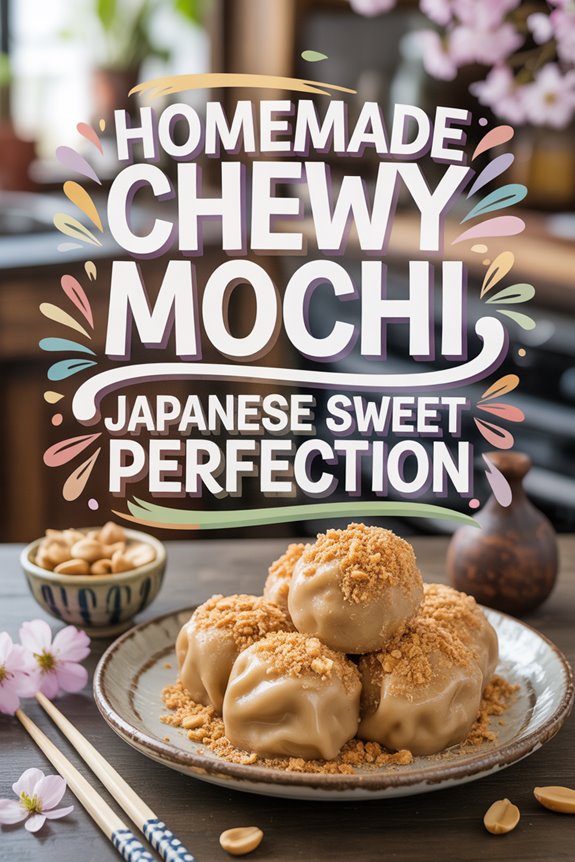
Homemade Chewy Mochi Recipe: Japanese Sweet Perfection
Discover the secret to perfect homemade chewy mochi that melts in your mouth and keeps you coming back for more—delight awaits inside this recipe.
Why You’ll Love this Chewy Mochi
Chewy mochi is like a little bundle of magic—soft, stretchy, and just a bit sticky, but in the best way possible. Its texture alone makes it hard to resist. You know that satisfying pull when you bite into something that’s both tender and elastic? That’s mochi working its charm.
Plus, it’s oddly fun to handle—kneading and stretching it feels like playing with edible putty. Don’t you love treats that engage you beyond just taste?
And here’s the kicker: it’s simple to whip up, no fancy equipment needed. Mochi’s subtle sweetness pairs perfectly with a variety of coatings or fillings, making it endlessly customizable.
Trust me, once you taste this chewy delight, you’ll wonder why it’s taken so long to discover such a playful, comforting snack.
What Ingredients are in Chewy Mochi?
Alright, let’s talk ingredients—because what you put in really makes or breaks your mochi mojo. This chewy, stretchy goodness mainly needs just a few simple things that you might already have hanging out in your pantry.
You may be interested


And don’t let that fool you; these humble ingredients come together to create a texture that’s almost magical. No complicated stuff here—just the essentials for that perfect chewy bite.
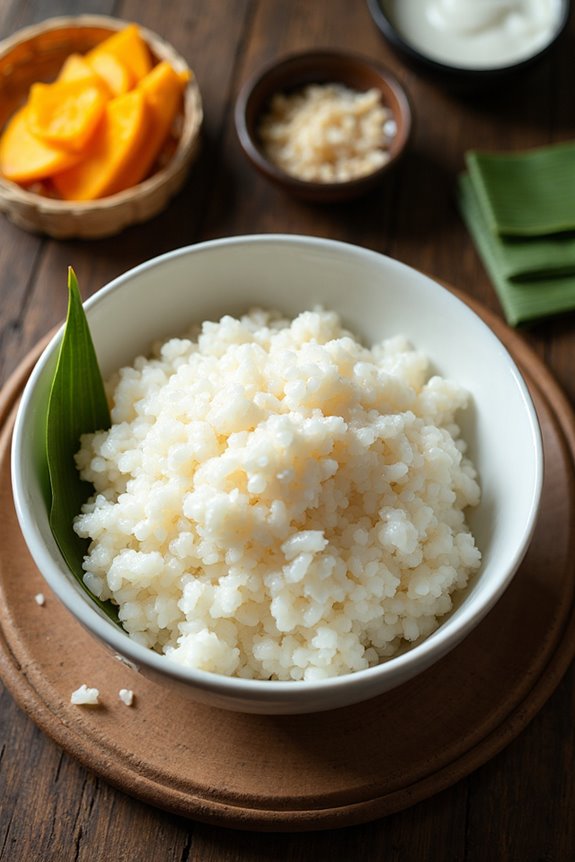
- 7 tablespoons glutinous rice flour (this is key; regular rice flour won’t cut it. You can use mochiko or a similar brand)
- 5 tablespoons boiling water (hot enough to help the flour gel up nicely)
- 1 tablespoon sugar (just enough to give a subtle sweetness)
- 1/4 cup roasted unsalted peanuts (optional, but fantastic for coating; best if they’re skinned)
Now, a quick word on the flour—glutinous rice flour is the star here. It’s what gives mochi its signature chewiness, so don’t swap it for regular flour or any other type.
The boiling water is critical too; it’s what activates the starch, making the dough stretchy and cohesive. Sugar’s pretty straightforward but don’t overdo it—mochi is meant to have a gentle sweet touch, not a candy overload.
As for the peanuts, they add a lovely nutty contrast when you coat the mochi, but if you’re feeling adventurous, you could skip them or swap in something else like toasted sesame seeds.
Just remember, the key is to keep it simple, so nothing overwhelms that delightful chewy texture.
How to Make this Chewy Mochi
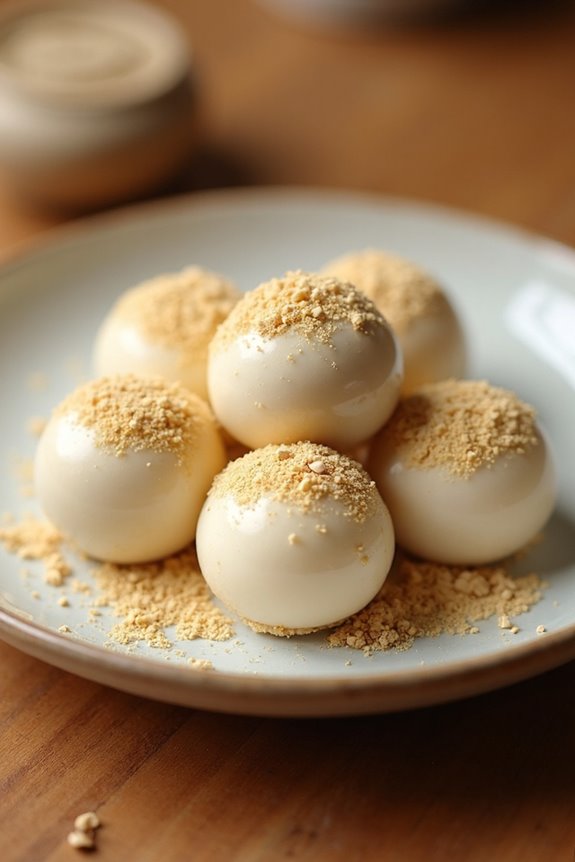
Alright, let’s explore making this chewy mochi, which is surprisingly simple but feels quite fancy. Start by grabbing 7 tablespoons of glutinous rice flour—this can be mochiko or any similar brand you find (even a Thai one works fine). Toss it into a bowl with 1 tablespoon of sugar.
Then, while stirring with a spoon or a small spatula, slowly pour in 5 tablespoons of boiling water. Now, here’s the tricky part: keep stirring in a clockwise motion until the batter is smooth and slightly elastic, which usually takes about two minutes. It’s going to get tough to stir — like, seriously, your arm might want to quit — but push through! The goal is a lump-free, stretchy batter.
Once you’ve got that, cover the bowl with plastic wrap and microwave it on high for 2 to 4 minutes, depending on your microwave’s power. Watch closely because microwaves can be sneaky.
After microwaving, it’s time to grease a ziplock bag well. Invert the bag so the oily side faces out, and then carefully invert the mochi out of the bowl into the bag (careful, it’s hot!). You can let it cool a bit, but the longer it rests, the harder it’s to clean the bowl afterward—kind of a lose-lose situation.
Now comes the fun, hands-on part: kneading. While the mochi is still warm, stretch and flatten the dough inside the bag with your palm, then pick up a corner and shake it so the dough rolls into a ball again. Repeat this for about 7 to 10 minutes until you reach your desired chewiness. If the bag method feels awkward, you can also grease a bowl and knead it like dough. It’s a workout, but your future self will thank you.
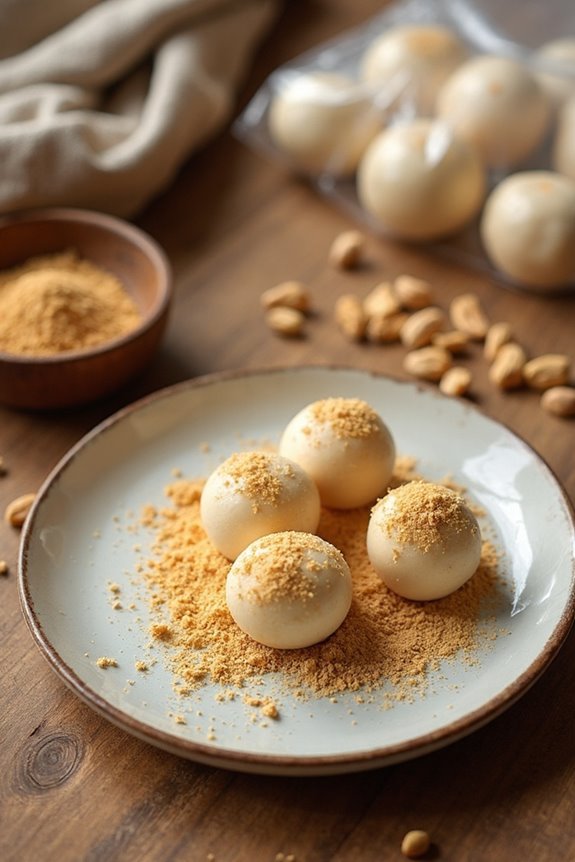
To finish off, grab about a quarter cup of roasted unsalted peanuts (preferably skinned), pulse them into a powder but don’t add sugar to the coating—that would make everything super sticky, and nobody wants that.
Spread the peanut powder on a plate, then pinch off teaspoon-sized mochi balls and roll them around in the powder until they’re well-coated. If you’re using the bag method, just snip a small corner and squeeze out little balls onto the plate, then separate them with greased scissors or chopsticks.
And there you have it: chewy, nutty mochi that’s just waiting to be devoured. For a twist, you could even stuff them with sweet red bean paste, turning these into classic daifukus. Just imagine the possibilities!
For best results, consider preparing this recipe using a Filipino cooking appliance set to enhance your kitchen experience and efficiency.
Chewy Mochi Substitutions and Variations
While the classic mochi recipe is pretty straightforward, swapping out ingredients or trying different add-ins can make things way more interesting—and yes, a bit more fun too.
For example, instead of just plain glutinous rice flour, why not try mixing in some matcha powder? It gives that lovely green tint and a subtle earthy flavor.
Or, if peanuts aren’t your thing, crushed toasted sesame seeds add a nice crunch and nuttiness without the stickiness.
Feeling adventurous? Wrapping the mochi around sweet red bean paste creates daifuku—soft, chewy, and sweet all at once.
And for a twist, adding a drop of vanilla or almond extract to the batter can surprise your taste buds.
These little tweaks keep the recipe fresh without making it complicated. Because, let’s be honest, who wants complicated mochi?
What to Serve with Chewy Mochi
What pairs perfectly with chewy mochi? Honestly, the answer isn’t complicated. Green tea, especially matcha, is a classic—its bitterness cuts through the mochi’s sweetness like a pro.
If you want to get fancy, try a light fruit salad with citrus—orange slices, kiwi, maybe some pomegranate seeds. The fresh tang balances the chewy texture and adds a zesty punch.
For those who love a savory twist, a tiny scoop of soy sauce or miso-based dip might surprise you (don’t knock it till you try it).
Feeling like dessert with dessert? A little vanilla ice cream or sweet red bean paste alongside makes every bite feel like a party.
The key? Contrast and balance. Mochi alone is great, but with the right sidekick, it’s unforgettable.
Final Thoughts
Even if you think mochi is just another chewy snack, it’s way more than that once you get the hang of making it yourself.
The magic happens when you mix glutinous rice flour with boiling water, then knead that sticky dough until it’s perfectly elastic. Sure, the stirring can feel like wrestling a slippery octopus, but stick with it.
Coating each bite in roasted peanut powder? Pure genius—no extra sugar needed to make it sticky, just that nutty crunch.
And hey, don’t be shy about trying different fillings like sweet red bean paste if you want. Mochi isn’t just a treat; it’s a hands-on adventure in texture and flavor.
Once you nail the technique, you’ll see—it’s totally worth the effort.