Links below are affiliate links. We earn a commission on purchases at no extra cost to you.
Fire-Pit Beef Ribs Recipe: Tender, Smoky Deliciousness
Keen to master tender, smoky fire-pit beef ribs? Discover the perfect seasoning and slow-cooking secrets that will transform your outdoor feast.
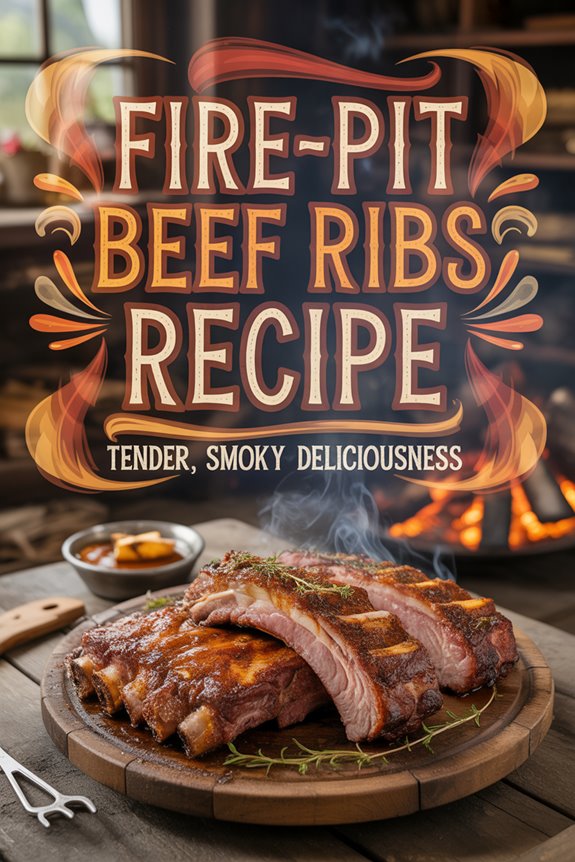
Why You’ll Love these Fire-Pit Beef Ribs
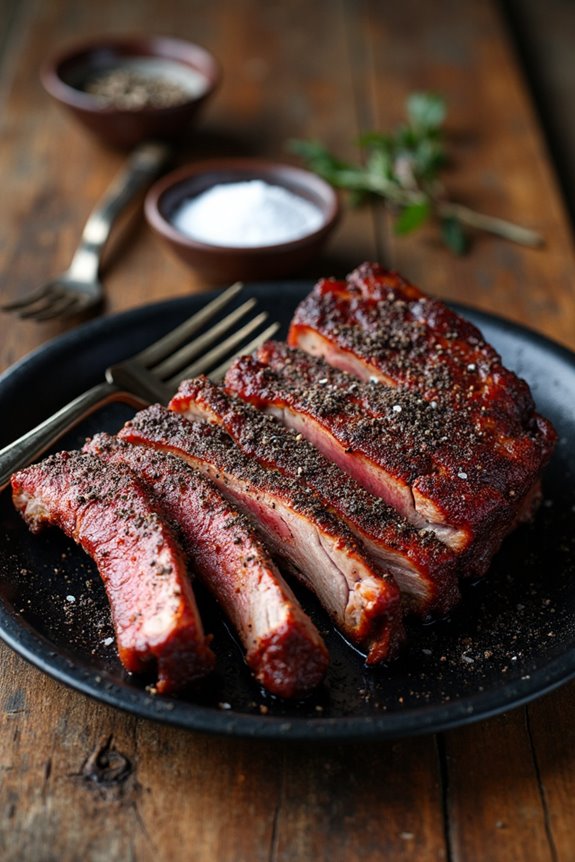
Although beef ribs might seem intimidating at first, they’re actually a game-changer when cooked over a fire pit. Imagine that smoky, tender meat pulling away from the bone with almost no effort—sounds dreamy, right?
The slow, low heat of the fire pit breaks down all that connective tissue, turning tough ribs into melt-in-your-mouth goodness. Plus, cooking over a fire pit adds this subtle char and smoky flavor you just can’t get from an oven. It’s like the ribs get a personality makeover.
And yes, it takes a good few hours, but that’s when the magic happens. You get to relax, maybe sip something cold, while the fire does all the heavy lifting. Trust me, your taste buds will thank you for the patience.
What Ingredients are in Fire-Pit Beef Ribs?
Alright, let’s get down to the basics of what you need to make these fire-pit beef ribs sing. Surprisingly, it’s not a laundry list of exotic spices or fancy sauces—sometimes the simplest ingredients bring out the best flavors, especially when you’re cooking over an open fire.
The star of the show is, of course, the beef ribs themselves. Then, a good sprinkle of coarse salt and freshly cracked black pepper is your secret weapon to enhance the natural richness of the meat as it slowly cooks into tender perfection.
Here’s what you’ll need:
- 1 rack of beef ribs (about 1 pound)
- Coarse salt
- Freshly ground coarse black pepper

Read moreAsian-Spiced Beef Stir Fry Recipe
That’s it. Just three things, but don’t let the simplicity fool you. The quality of your beef ribs makes a huge difference—look for ribs with a nice amount of marbling, which means juicy, flavorful meat.
And when it comes to seasoning, keep it straightforward. Coarse salt and fresh black pepper aren’t just seasonings; they’re flavor amplifiers that help create that irresistible crust on the outside. No need for complex rubs or marinades here—let the fire pit do the heavy lifting, and these humble ingredients will shine.
Oh, and if you’re feeling adventurous, you can always add a bit of garlic powder or smoked paprika to the mix, but honestly, the basics are perfect for getting that smoky, charred goodness just right.
How to Make these Fire-Pit Beef Ribs
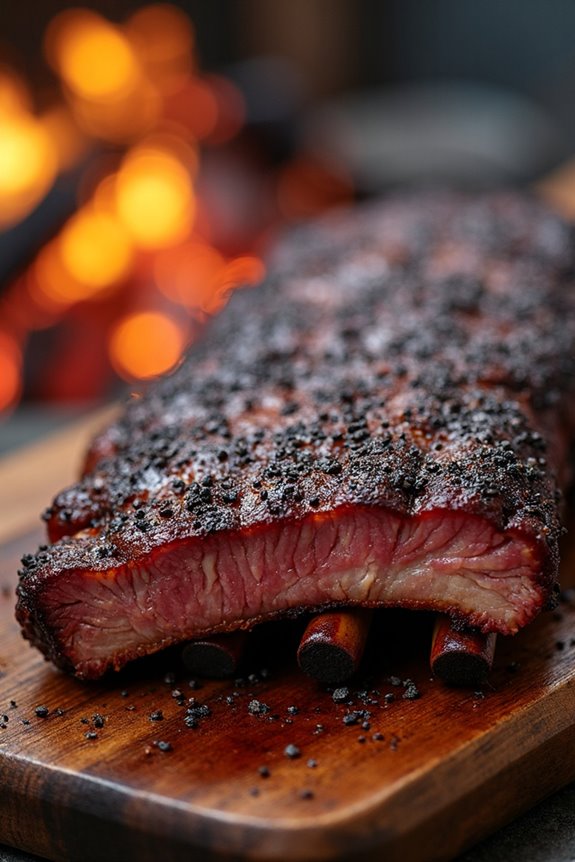
Alright, let’s plunge into making these beef ribs that’ll steal the show at your next cookout. Start with one rack of beef ribs, about a pound—nothing fancy, just good, hearty ribs.
The seasoning is straightforward: a generous sprinkle of coarse salt and freshly ground black pepper. Don’t be shy here. Think of it as giving the ribs a nice little spa treatment before the big cook. Massage that salt and pepper blend all over the meat, making certain every nook and cranny is covered. This simple seasoning is the unsung hero, letting the beef’s rich flavor shine through without any distractions.
Now, the cooking part is where patience really pays off. Place the ribs on the lower rack of your fire pit—right next to the fire but not too close, because slow and steady wins this race.
If you’re using a grill, preheat it to a cozy 300 to 350 degrees Fahrenheit. The key is low and slow—expect this to take about 4 to 6 hours. Yes, it’s a commitment, but trust me, it’s worth every minute.

Rotate the ribs three times during cooking to guarantee even heat and that perfect crust all around. You’re aiming for an internal temperature of 190 to 200 degrees Fahrenheit—that’s when the meat becomes tender enough to almost fall off the bone, but still juicy.
To ensure the best results, consider using an outdoor grill cookware set designed for even heat distribution and durability.
Fire-Pit Beef Ribs Substitutions and Variations
When you’re craving that smoky, tender beef rib experience but want to mix things up, substitutions and variations come to the rescue.
For example, swapping beef ribs for pork ribs changes the game, offering a sweeter, lighter bite that still soaks up smoky flavors beautifully.
Or, try a dry rub with brown sugar, paprika, and a pinch of cayenne instead of plain salt and pepper—trust me, it adds a lovely kick without stealing the spotlight.
Don’t shy away from experimenting with wood chips, either; hickory brings boldness, while applewood lends a subtle, fruity note.
And if patience isn’t your virtue, cutting ribs into smaller pieces speeds up cooking but beware—overcooking can sneak in fast.
Variety keeps things exciting, right?
What to Serve with Fire-Pit Beef Ribs
Choosing the right sides for fire-pit beef ribs can turn a good meal into a memorable feast. Think bold but balanced: creamy coleslaw adds a revitalizing crunch, cutting through that rich, smoky meat.
Don’t forget classic baked beans—they’re sweet, hearty, and perfect for soaking up juices. Roasted corn on the cob? Yes, please. It brings a little sweetness and a lot of summer vibes.
For something lighter, a simple green salad dressed with tangy vinaigrette keeps things crisp. And hey, if you want to impress, whipped mashed potatoes with garlic—silky and buttery—are a no-brainer. It’s like giving your ribs a cozy, flavorful blanket.
Serving these sides alongside those tender ribs? That’s how you make a meal people remember, without needing a fire pit every time.
Final Thoughts
There’s a certain magic in slow-cooked beef ribs, isn’t there? The way that smoky aroma seeps into the meat, the tenderness that makes you almost forget the hours it takes to get there.
If you’re aiming for ribs that practically fall off the bone, patience is your best friend—keep that fire steady between 300 and 350 degrees Fahrenheit, and let time do its thing.
Don’t rush; rotate the ribs every couple of hours to get that even cook and killer crust. Salt and pepper? Simple, but essential.
Pair these ribs with something fresh or tangy to cut through the richness—trust me, your taste buds will thank you.
Fire-pit cooking isn’t just about food; it’s an experience. So, why not savor every smoky, juicy bite?