Links below are affiliate links. We earn a commission on purchases at no extra cost to you.
Sizzling Korean Bibimbap Recipe: A Bowl of Joy
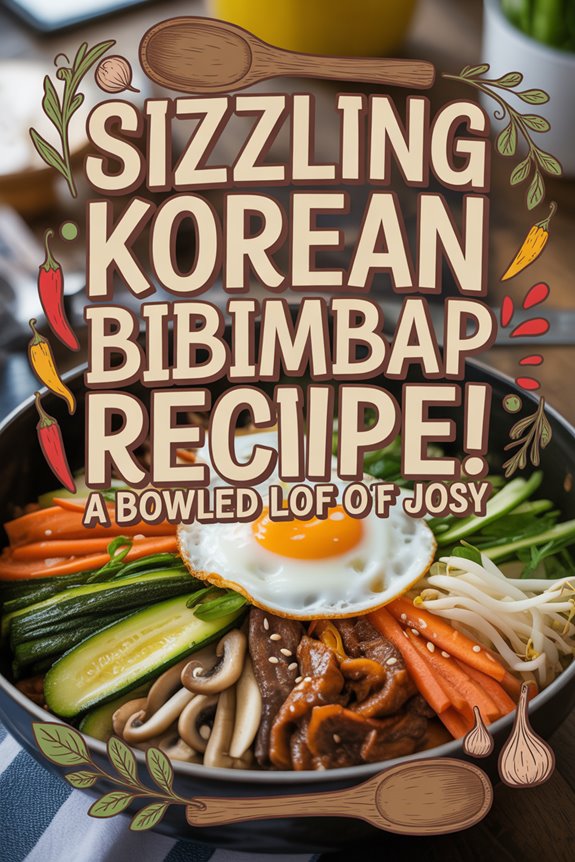
Warm, vibrant, and bursting with flavor, this sizzling Korean bibimbap recipe promises a bowl of joy you’ll want to savor again and again.

Why You’ll Love this Sizzling Korean Bibimbap
Even if you’re not usually one for mixing everything on your plate, this sizzling Korean bibimbap might just change your mind.
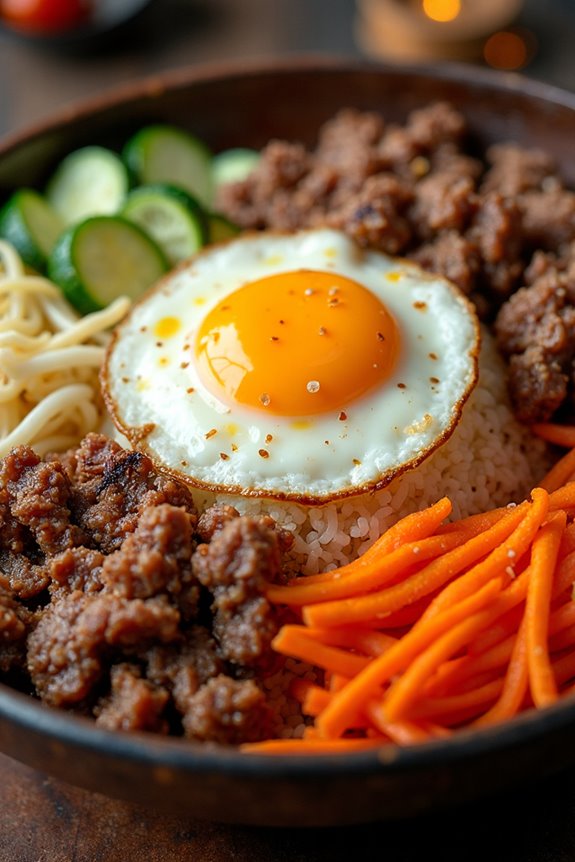
Imagine this: a warm bowl packed with colorful veggies, tender beef, and a perfectly fried egg sitting on fluffy rice. The magic happens when you break that yolk and stir everything together—suddenly, flavors meld into this comforting, slightly spicy, nutty delight.
It’s like a flavor party where everyone’s invited, and no one’s stepping on toes. Plus, it’s surprisingly simple to make, even if you’re not a kitchen pro.
Trust me, the sizzling sound from the hot skillet adds a little excitement, like your dinner is doing the cha-cha. This meal isn’t just food; it’s a joyful, satisfying experience you’ll want on repeat.
What Ingredients are in Sizzling Korean Bibimbap?
Alright, let’s talk ingredients — the heart and soul of this sizzling Korean bibimbap. Think of it as a colorful party on your plate where every component has a role to play, from the savory beef to the fresh veggies and that golden fried egg on top. Each ingredient brings its own personality, texture, and flavor, making sure every bite is an adventure. Ready to see what goes into this bowl of yum?
Here’s the lineup:
- 2 tablespoons soy sauce
- 3 tablespoons sesame oil
- 2 teaspoons sugar
- 1 garlic clove, minced
- 1/2 teaspoon ginger, grated
- 1/2 cup apple juice
- 1/2 pound lean ground beef
- 1 cup short-grain rice
- 2 eggs
- 1/2 zucchini, thinly sliced
- 1 cup mushrooms, thinly sliced
- 1/2 cup bean sprouts
- 1/2 cup carrot, julienned
- 1/4 cup Korean chili paste
- 2 tablespoons rice wine vinegar

Read moreAcai Passion Martini Recipe
Now, don’t let the list intimidate you — it’s just a bunch of simple stuff that somehow turns into magic when combined. The soy sauce and sesame oil team up for that umami and nutty vibe, while the apple juice adds a hint of sweetness that balances everything out.
The veggies bring freshness and crunch, and the chili paste? That’s where you decide how fiery you want the party to get. Plus, short-grain rice is your best friend here, sticking together just right to hold everything in harmony when you stir it all up.
Oh, and if you’re not a fan of any particular veggie, feel free to swap it out — bibimbap is forgiving like that. Just keep the balance of textures and flavors in mind, and you’ll be all set.
How to Make this Sizzling Korean Bibimbap
Alright, ready to whip up some Korean bibimbap that’s as colorful as it’s tasty? First, you’ll want to mix together a sauce that’s going to take your ground beef from “meh” to “wow.” Grab 2 tablespoons of soy sauce, 3 tablespoons of sesame oil (but hold on to a bit for later), 2 teaspoons of sugar, a minced garlic clove, ½ teaspoon of grated ginger, and a half cup of apple juice. Stir all this goodness up in a bowl, then toss in ½ pound of lean ground beef. Give it a good stir so every bit of beef gets a flavor hug, and set that aside to marinate while you get other elements going.
Next, let’s talk veggies and rice. Cook 1 cup of short-grain rice according to the package directions—you want it fluffy but still sticky enough to hold everything together.
While that’s cooking, heat a skillet with ½ tablespoon of sesame oil and sauté ½ a thinly sliced zucchini for about 5 minutes until it’s tender but not mushy. Pop those zucchini slices into a bowl, then add another ½ tablespoon of oil to the skillet for 1 cup of thinly sliced mushrooms. Cook them too, about 5 minutes, until soft and flavorful, then toss them with the zucchini.
Meanwhile, blanch ½ cup of bean sprouts by dunking them in boiling water for just a minute—quick and easy, and it keeps them crisp. Now, use the same skillet (no extra oil needed this time) to cook your marinated beef until it’s fully browned and smelling irresistible.
Read moreAsian Beef & Broccoli Recipe
Almost done. Heat the last tablespoon of sesame oil in the skillet and fry 2 eggs until the whites are set but those yolks stay gloriously runny—because nothing says bibimbap like a rich yolk that ties it all together.
Now it’s assembly time, which is honestly the best part. In a big bowl, pile half of your cooked rice in the center. Arrange half of the zucchini, mushrooms, bean sprouts, and julienned carrots neatly around the rice.
Sprinkle half the beef over those veggies, then crown the whole thing with a fried egg. Serve it up with a spoonful of ¼ cup Korean chili paste and 2 tablespoons of rice wine vinegar on the side.
When you’re ready to eat, break that yolk and stir everything vigorously. It’s a flavor explosion that’s messy, fun, and totally worth it. Expect a bit of a workout mixing all those ingredients, but hey, that’s part of the bibimbap charm. Dig in! For an extra boost in preparation efficiency, consider using a premium food processor to handle your chopping and mixing tasks effortlessly.
Sizzling Korean Bibimbap Substitutions and Variations
While the classic bibimbap recipe is a star on its own, don’t let that stop you from mixing things up a bit.
Feeling adventurous? Swap the ground beef for tofu or chicken for a lighter twist.
Mushrooms can be traded for spinach or kale if you’re craving something greener.
Don’t have short-grain rice? Quinoa or cauliflower rice works surprisingly well, adding a different texture but keeping that wholesome vibe.
Eggs? Hard-boiled or even a sunny-side-up egg can change the game.
And if you’re not a fan of gochujang, try a drizzle of sriracha or a soy-sesame sauce instead.
The beauty? Bibimbap invites you to experiment, so don’t be shy—make it yours, and enjoy every colorful, sizzling bite.
What to Serve with Sizzling Korean Bibimbap
Mixing up the ingredients in bibimbap is fun, but what you serve alongside it can really make or break the meal.
Think simple, fresh, and crunchy to balance that hot, savory bowl. Kimchi is a must—its tangy, spicy punch cuts through the richness perfectly. Add a side of pickled cucumbers or radishes for a crisp, cooling contrast.
If you want to get fancy, a light seaweed salad works wonders, offering a subtle briny flavor. And don’t forget a bowl of mild, clear soup—something like a gentle egg drop or miso helps soothe the palate between bites.
Trust me, these sides won’t just complement bibimbap; they’ll elevate the whole experience, making every mouthful sing without stealing the spotlight.
Final Thoughts
Even if you’re new to Korean cooking, bibimbap is one dish that’s surprisingly forgiving and totally worth the effort. The mix of warm rice, sautéed veggies, savory beef, and that runny egg? It hits all the right notes.
Plus, it’s customizable—don’t like mushrooms? Swap them out. Hate spicy? Use less chili paste. The key is layering flavors and textures just right, then breaking that yolk to tie it all together.
It’s like a flavor party in your mouth, and everyone’s invited. Sure, it might look like a lot on your plate, but trust me, once you stir it up, it all blends perfectly.