Links below are affiliate links. We earn a commission on purchases at no extra cost to you.
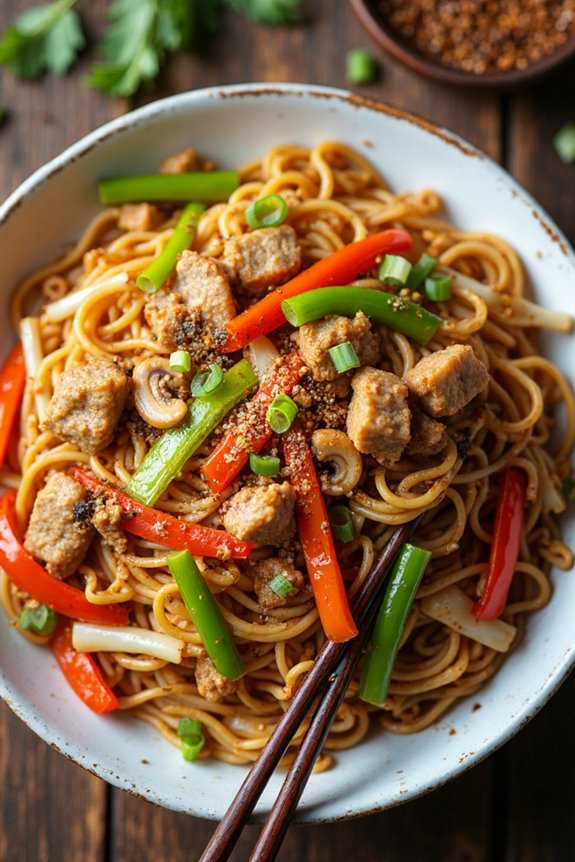
Authentic Japchae Recipe: Savory Korean Glass Noodles
Whip up authentic japchae with savory Korean glass noodles that balance vibrant veggies and rich flavors in every bite—discover the secret to perfect texture.
Why You’ll Love these Savory Korean Glass Noodles
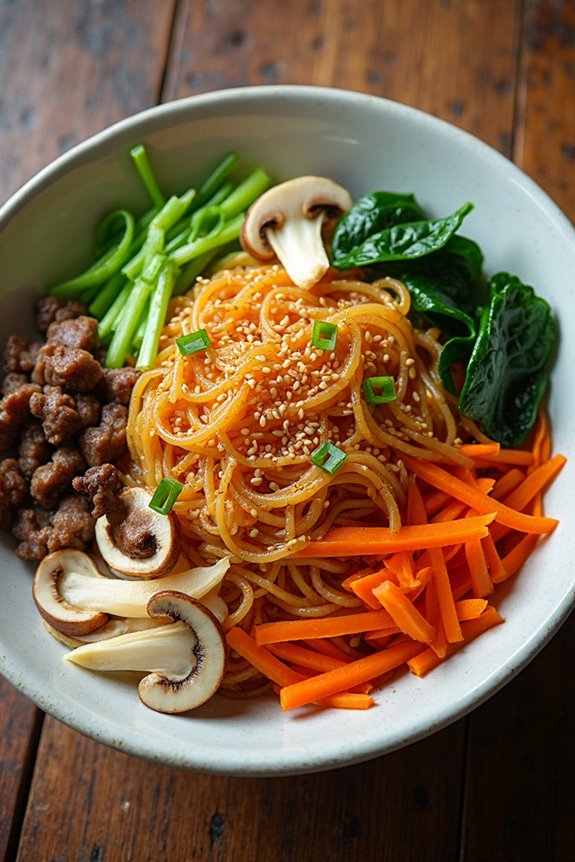
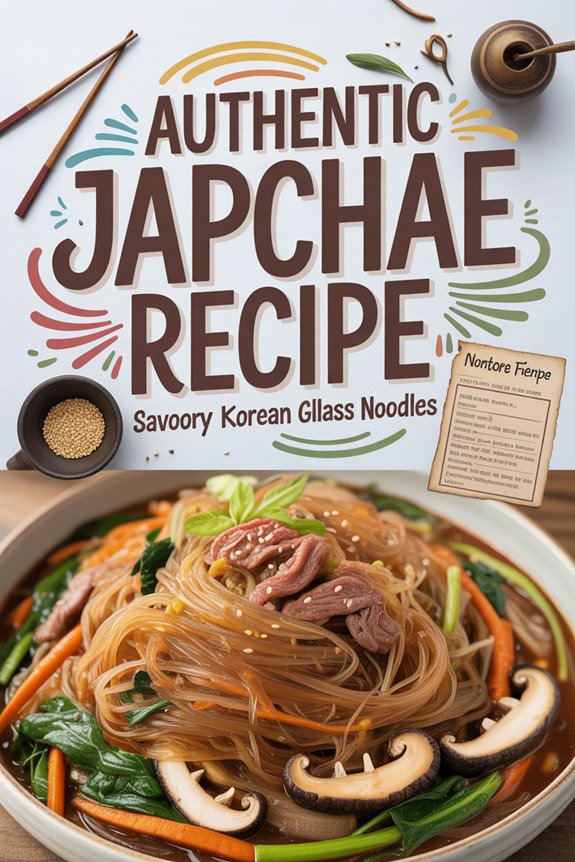
Why do these Korean glass noodles, or japchae, grab your attention every time? It’s the way those translucent noodles shimmer, almost like edible jewelry, promising a chewy, satisfying bite.
They’re not your average noodles—slippery yet springy, soaking up flavors without turning mushy. Japchae somehow balances textures beautifully: tender noodles, crisp veggies, and that subtle sweetness mingling with savory soy sauce.
Plus, the colors—greens, oranges, whites—make it feel like a party on your plate. You might think, “Noodles? Been there, done that.” But japchae isn’t just food; it’s a dance of flavors and textures that’s surprisingly light yet filling.
It’s perfect for when you want something comforting but not heavy. Trust me, once you get a taste, you’ll be hooked.
What Ingredients are in Savory Korean Glass Noodles?
Let’s talk ingredients. When it comes to making authentic japchae, you’re dealing with a colorful lineup of fresh goodies and pantry staples that combine into something truly special. It’s like a mini orchestra of flavors and textures, where each component plays its part—no solo acts here.
The star, of course, is the Korean starch noodles, also called dangmyun—those translucent, glass-like noodles that soak up all the savory-sweet goodness. Then, you’ve got a bunch of vibrant veggies and some beef for that meaty depth, but don’t worry if you want to keep it vegetarian. Ready to peek at the full list?
- 150 g Korean starch noodles (dangmyun)
- 1 bunch spinach
- 1 medium carrot, cut into thin matchsticks
- 1 medium onion, sliced thinly
- 5 dried shiitake mushrooms
- 2 cups sliced white mushrooms
- 3 garlic cloves, minced
- 7–8 green onions, cut into 7 cm long pieces
- 150 g beef (optional)
- 4 tablespoons soy sauce, divided
- 4 tablespoons sesame oil, divided
- Olive oil (for stir-frying)
- 3 tablespoons sugar
- 1 teaspoon ground black pepper
- 1 tablespoon toasted sesame seeds

Read moreAcai Passion Martini Recipe
Now, a quick heads-up about these ingredients. The dried shiitake mushrooms need soaking ahead of time to get that perfect tender texture—and yes, it’s worth the wait because they pack a rich umami punch.
The noodles might look a bit intimidating at first, but once you boil and chop them up, they’re easy to handle. And hey, the beef is optional, so if you’re feeling plant-powered, just skip it or double up on mushrooms for that hearty feel.
Also, keep soy sauce and sesame oil handy because they’re the magic elixirs that make japchae sing. Oh, and don’t skimp on the sugar—it balances all that savory goodness like a pro. With these ingredients, you’re all set to make a dish that’s bursting with flavor and color, just waiting to impress.
How to Make these Savory Korean Glass Noodles
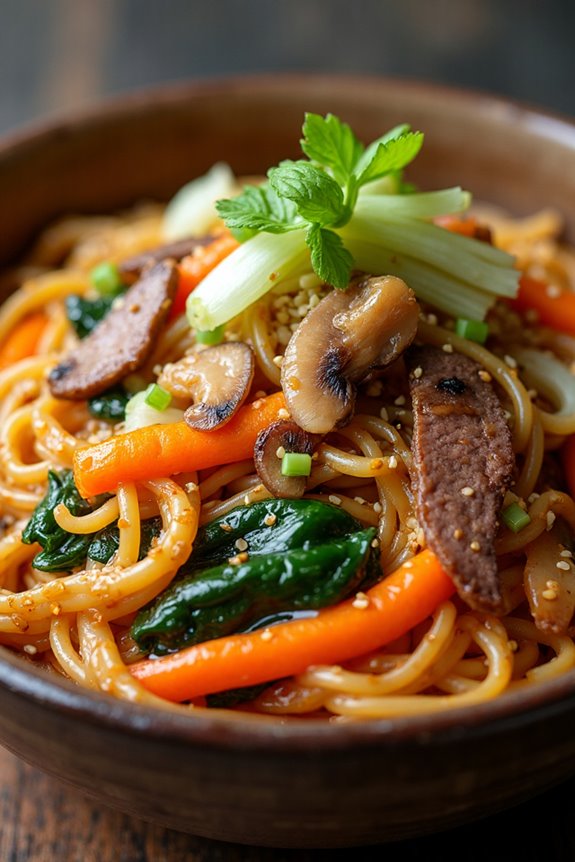
Alright, ready to plunge into the magic of Japchae? First up, the star of the show: 150 grams of Korean starch noodles, also known as dangmyun. These slippery beauties need a quick bath in boiling water, about 3 minutes should do it. Keep an eye on them—nobody wants mushy noodles or crunchy surprises.
Once they’re just right, drain and plop them into a big bowl. Now, here’s a little trick: snip the noodles a few times with scissors—yes, scissors! It’s like giving them a haircut so they’re easier to eat later. Toss in 1 tablespoon of soy sauce and 1 tablespoon of sesame oil to coat those strands evenly, and set them aside to soak up all that flavor.
Now, the veggies and beef bring this dish to life. Start by soaking 5 dried shiitake mushrooms in warm water for a few hours until they soften—think of it as their spa day. After they’re pliable, squeeze out the water and slice them thinly.
Next, blanch 1 bunch of spinach in boiling water for just a minute, then rinse it in cold water three times—yes, three! This keeps the spinach crisp and cleansed of any dirt lurking around. Squeeze out excess water and chop into 5-centimeter pieces. Season with half a tablespoon each of soy sauce and sesame oil, then toss that into your big bowl.
Read moreAsian Beef & Broccoli Recipe
Meanwhile, stir-fry your carrot matchsticks (1 medium carrot) and sliced onion (1 medium onion) separately in just a few drops of olive oil until they’re tender but not mushy—nobody wants burnt or soggy veggies here. Add those to the bowl along with the sautéed white mushrooms (2 cups) and green onions (7 to 8 stalks, cut into 7-centimeter pieces), each cooked gently in olive oil.
For the grand finale, throw the beef strips (about 150 grams, if you’re including meat) and those shiitake mushrooms into the pan with a few drops of olive oil. Cook until the beef is just right, then add 3 minced garlic cloves, half a tablespoon each of soy sauce and sugar.
Give it a quick stir-fry for 30 seconds—this step is where the flavors really start to party together. Finally, dump everything back into the big bowl, add 2 tablespoons of soy sauce, 3 tablespoons of sugar, 2 tablespoons of sesame oil, and a teaspoon of ground pepper.
Mix it all up like you mean it, and sprinkle a tablespoon of toasted sesame seeds on top. There you go—a bowl full of savory, slightly sweet, and utterly irresistible Korean glass noodles. Hungry yet? For best results, consider cooking your Japchae in a Le Creuset Dutch Oven, which offers even heat distribution and excellent flavor retention.
Savory Korean Glass Noodles Substitutions and Variations
When it comes to savory Korean glass noodles, sometimes the exact ingredients aren’t easy to find, or maybe you’re just in the mood to shake things up a bit.
No dangmyun? Sweet potato starch noodles work, or even mung bean noodles if you’re feeling adventurous.
Don’t stress the veggies—spinach can swap for bok choy or kale, and shiitake mushrooms? Button or cremini mushrooms step in nicely.
Beef’s classic, but tofu or chicken add some fun variety.
Soy sauce can be light or dark, depending on your taste, and if sesame oil’s scarce, a touch of toasted walnut oil brings a new twist.
These swaps keep the soul of japchae but let you play chef without the panic.
Who said tradition can’t be a little flexible?
What to Serve with Savory Korean Glass Noodles
Even though savory Korean glass noodles, or japchae, can shine all on their own, pairing them with the right sides can turn a simple meal into a feast worth bragging about.
Think kimchi—spicy, tangy, and crunchy—it cuts through the sweet and savory flavors perfectly. A bowl of steamed rice is a classic, soaking up any extra sauce like a champ.
For some crunch, why not try pickled cucumbers or radishes? They add a revitalizing bite that balances japchae’s softness. If you want protein, grilled bulgogi or pan-fried tofu work wonders, complementing without overpowering.
And don’t forget a light soup, like miso or a clear broth, to round things out. Trust me, these combos make japchae feel like a celebration, not just dinner.
Final Thoughts
Pairing japchae with the right sides can turn a simple meal into something special, but let’s not forget what really brings it all together: the noodles themselves.
Those slippery, chewy dangmyun noodles soak up soy sauce and sesame oil like little flavor sponges, making every bite a savory delight. It’s essential not to overcook them—just a quick boil until tender, then toss with oil and soy sauce to keep them from sticking.
The mix of textures from tender spinach, crisp carrots, and juicy mushrooms makes it more than noodles—it’s a party in your mouth. Honestly, japchae balances sweet, salty, and earthy so well, it’s hard not to fall in love.
Just remember, patience and the right seasoning make all the difference—no shortcuts here!